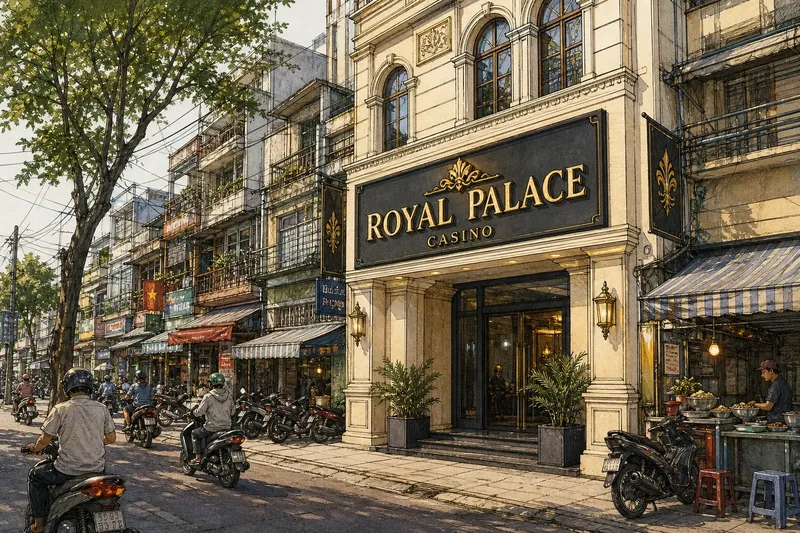
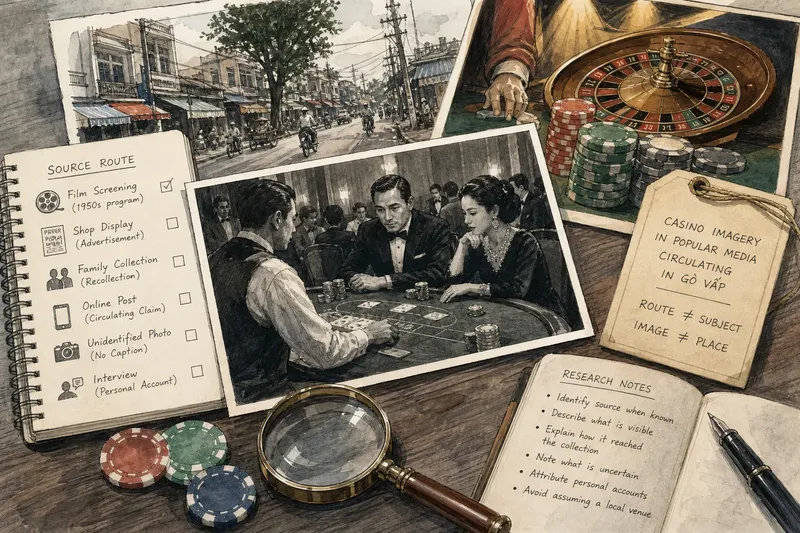
Describing Casino Glamour in Gò Vấp Without Overclaiming
Describe casino glamour in Gò Vấp more precisely by separating visible design choices from promotional claims, venue details, and interpretation.
The most common mistake in describing casino glamour in Gò Vấp is treating a polished image as a description of a place. That shortcut costs readers useful context: they may not know whether a sentence refers to an advertisement, an illustration, a sign, or an actual interior.
“Glamour” can name an impression, but it cannot supply missing details. A caption may use the word to describe a mood created by gold lettering or dramatic light; a promotional message may use it to invite an imagined occasion. Neither use, by itself, tells readers what a venue offers or who visits it.
Separate the image from the place it depicts
Casino imagery can appear in advertisements, editorial illustrations, signs, and public discussion. Those sources have different purposes. A promotional image is composed to present an idea; an illustration may be symbolic; a photograph records what its frame includes. Calling all of them “the casino’s glamour” obscures those differences.
A shop window offers a useful analogy: it displays selected objects while reflecting the street. The display is real, but it is not the whole shop. In the same way, a casino image can show how its maker chose to present a subject without establishing what lies beyond the frame.
Describe design choices before interpreting them
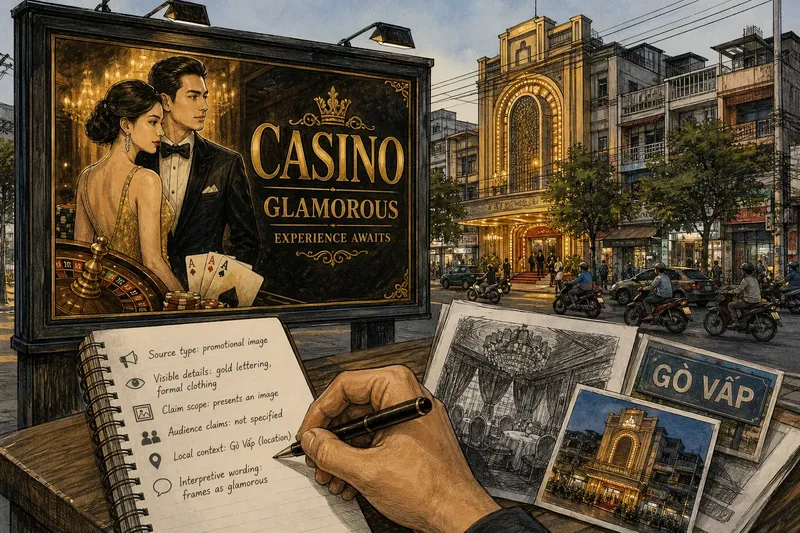
Start with details a reader can locate in the source: wording, color, clothing, lighting, or composition. Then make clear when you move from observation to interpretation. “The poster pairs gold lettering with an image of formal clothing” reports visible choices. “The poster frames casino-going as a glamorous occasion” interprets their combined effect.
Keep the source attached to the claim. If an editorial illustration uses a chandelier and a velvet curtain, describe the illustration, not an undocumented room. If a sign names Gò Vấp, that establishes a location reference; it does not establish how residents spend their leisure time or what the neighborhood is like as a whole.
Choose language that matches the source
Promotional copy presents an invitation
A headline calling a casino glamorous foregrounds mood and appeal. Readers should be able to tell that this is the advertiser’s presentation, not an independent account of the venue.
Descriptive copy names what is visible
“The advertisement uses bright lettering and formal clothing” is more specific than “The venue is glamorous.” Use only details the source supports; do not fill gaps with assumptions about service, atmosphere, or visitors.
Interpretive copy explains the framing
Commentary can explain that a particular image presents casino-going as an occasion. Keep that interpretation attached to the image, rather than turning it into a claim about every visitor or about life in Gò Vấp.
How should casino imagery in Gò Vấp be described?
What should I name before using “glamour”?
Name the source, such as a poster, photograph, sign, or illustration. Then identify the visible details that make the word relevant.
Does a glamorous image describe the actual venue?
Not by itself. An image documents its own presentation; claims about a room, service, or entry policy need a source that addresses those details.
How can I refer to Gò Vấp without generalizing?
Use the neighborhood as a location when that is what the source establishes. Do not turn one image or venue reference into a claim about local residents or the district’s character.
When should I use a more specific word?
Choose a supported description such as “brightly lit,” “formal,” or “ornate” when the sentence concerns visible features. Keep “glamour” when you are discussing the impression or promotional framing itself.
Check the source before settling on a description
Review the source against these concrete points. Each check should lead to a wording choice, not a guess.
- Source type: Check whether the item is an advertisement, sign, photograph, or illustration. If its type is clear, name it; if not, call it an image or text without assigning a purpose.
- Visible details: Check whether a feature such as lettering, color, clothing, or lighting can be seen. If it is visible, describe it; if it is not, omit it or state that the source does not show it.
- Claim scope: Check whether the sentence describes the source or the venue. If the source only presents an image, limit the claim to that presentation; if it documents a venue detail, attribute the detail to the source.
- Audience claims: Check whether the copy says who visits or may enter. If the source explicitly supports that claim, attribute it; if it does not, remove the claim.
- Local context: Check whether Gò Vấp is identified as a location or used to imply a broad local character. If only the location is established, state only that; if a broader claim lacks support, leave it out.
- Interpretive wording: Check whether “glamorous” is presented as a fact or an interpretation. If it is an interpretation, use a verb such as “frames” or “suggests”; if the sentence needs a factual description, replace the adjective with a visible detail.
Say you are captioning an invented promotional image, not documenting a real venue. The starting image has gold lettering, a person in formal clothing, and a caption that calls the casino glamorous. First, identify the source as a promotional image. Next, record the two visible design details without adding claims about the room or its visitors. Then write: “The promotional image uses gold lettering and formal clothing to frame the casino as glamorous.” The result describes the source’s presentation; it does not assert that a real venue or its patrons match the image.
Reserve “glamour” for the impression being discussed
The useful question is not whether the image is truthful, but what its design asks readers to notice. In public language about casinos in Gò Vấp, distinguish a record of visible choices from an interpretation of their effect. That lets the adjective describe a framing rather than quietly stand in for evidence about a place.